
Going to the Archives

Updated: Apr 25, 2022
What are the archives? They aren't just in big university libraries. They can also be found in your local community. Here in the East Bay, both Oakland and Berkeley have history rooms with a repository of excellent sources. While one of the key digital sources for this project were newspapers.com I started my search at the Berkeley History Room clipping files.
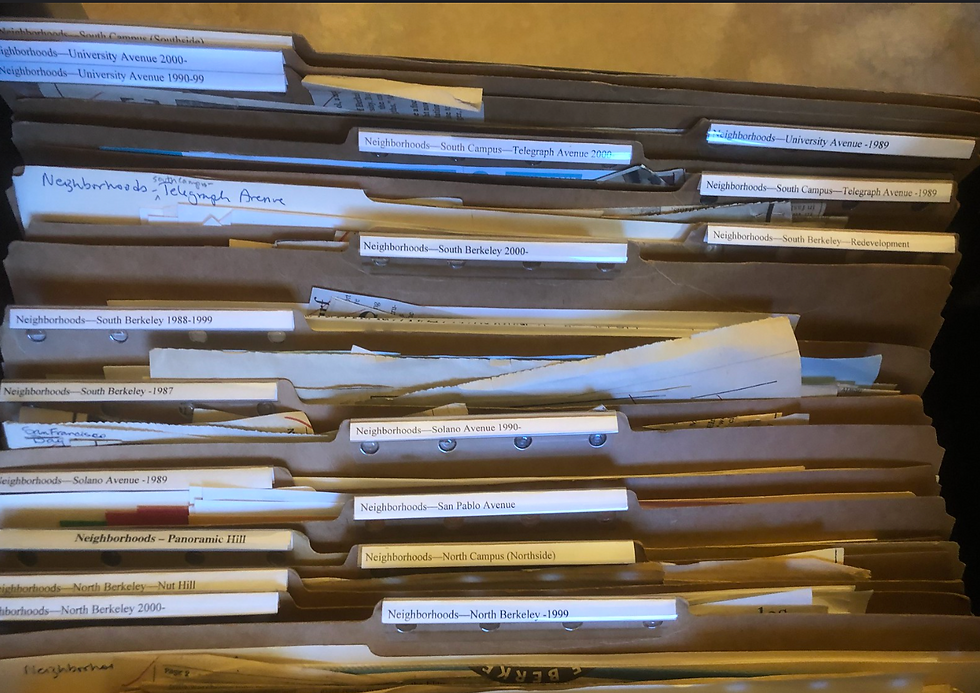
Clipping Files are vertical files with curated newspaper articles, literally clipped by the library staff over the years.
Above is an image I took of the Berkeley neighborhoods files. Taking digital images (no flash!) are fine depending on the research location. What isn't OK is ink. Taking digital photos with your smartphone can be quicker than taking notes, as they can be reviewed later at your leisure.
Other excellent community archives are the Berkeley or Hayward Historical Society -- These are non-profit organizations that are invested in community history. Like other archival locations, they have their own set of rules about what is and isn't allowed in their research areas. Berkeley Historical Society doesn't allow photographs for one --- so bringing a notebook and pencil are best.
Some research facilities require an appointment -- the Bancroft Library while an amazing trove of information and ephemera can't be accessed without an appointment. It's also best to request files in advance as many resources (like the Mason-McDuffie Company files) are stored offsite. An investment of time (as well as passion for investigative learning) is essential. They also have several rules that must be followed to access the archives, which include no pens, no folders, no backpacks -- just you -- a laptop or smartphone might be fine, (but again, you'll want to research that before showing up!) The Bancroft have refundable lockers to rent -- be sure to have a quarter or two on you ahead of time.
Both the Berkeley History Room and Oakland History Room require appointments. The latter can be reserved on the Oakland Public Library website. Why do some places require appointments? Because while you may only be working for a finite amount of time -- library staff have many people they are assisting and by making an appointment, they can best assist you by knowing ahead of your visit what items you may be interested in reviewing -- and it takes time to locate and pull related items together for you. It's a courtesy really, that helps you and the library staff.
So what are archives? -- Archives are a physical or digital repository -- and their contents vary. Archives can be Corporate historical records (businesses like SFMTA or Kaiser), but they can also include:
photographs from a newspaper's 'vault'
clipping files from a library or historical association
research and ephemera from a museum (like the Oakland Museum of California)
digitized journals and databases like archive.org which is a crowdsources repository that has all of these things, as well as out of print directories and book.
City records that are either accessed from a records room, library or digitized online for public access.
For this project I found myself at multiple libraries including Berkeley, Oakland, and San Francisco; and university libraries such as UC Berkeley and Cal State University East Bay (Hayward). I also utilized digital archives like newspapers.com and the internet archive (archive.org ) Digital history sites like BAHA (Berkeley Architectural Assoc.,), Calisphere (which has an archive of images) and SAADA, (South Asian American Digital Archive).
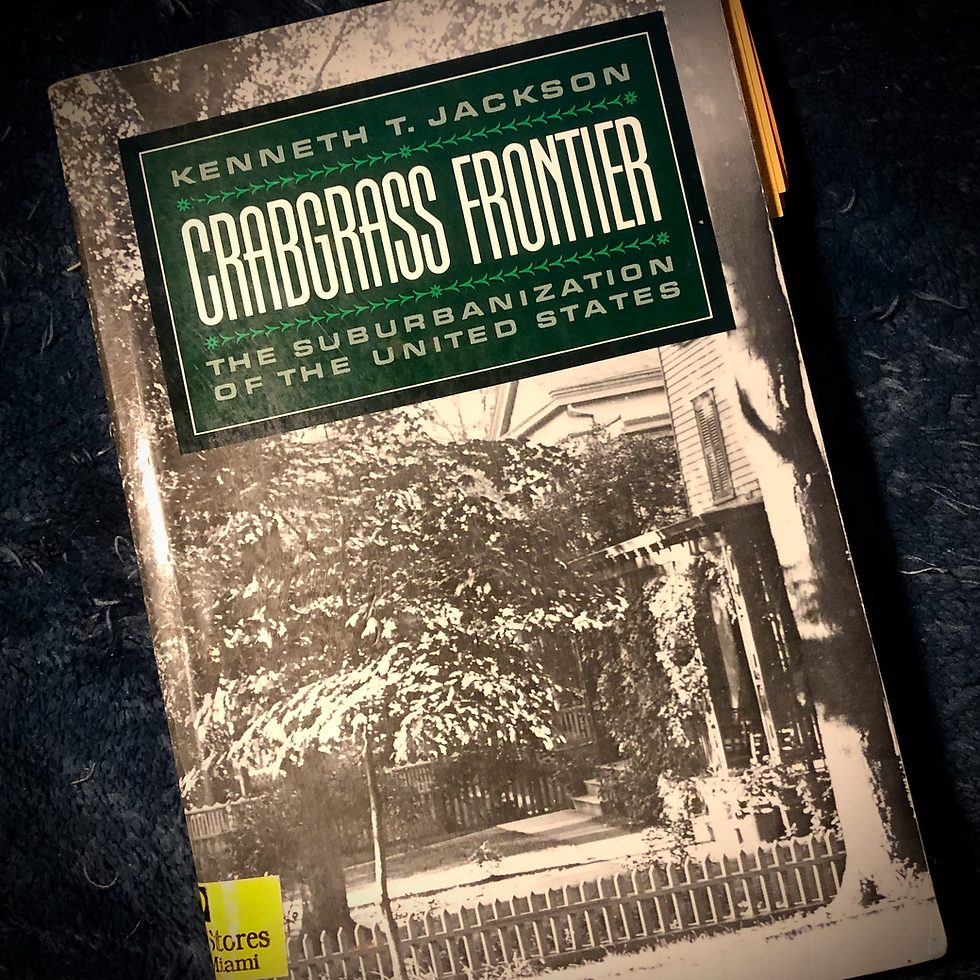
When starting a project for yourself -- ask yourself what do you know about your topic and who do you think will have some answers? Review a book on your topic. What are the sources the author uses for their monograph? Good researchers always cite their sources. A well researched book may have sources journals, other books, but also libraries and historical archives. Talking with, or emailing your local public library or school librarian is always a great way to start.

Comments