
Accessible Fonts

When working on this page, I wanted to be as inclusive as possible -- that means using a dyslexia-friendly font. A site I referenced for this project was the British Dyslexia Association. The site has suggestion of the different types of font that make letters feel 'less crowded.'
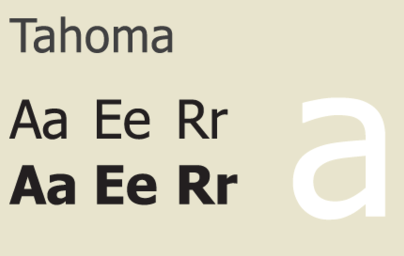
Use sans serif fonts, such as Arial and Comic Sans, as letters can appear less crowded. Alternatives include Verdana, Tahoma, Century Gothic, Trebuchet, Calibri, Open Sans.
For my project I've chosen to use Tahoma rather than Comic Sans -- Clean lines that also provides comprehension. -- A personal preference when I want a site that is representing my MA project as professional, but approachable to the public.
Color is another consideration for contrast. Here the British Dyslexia Assoc. suggests:
Use single colour backgrounds. Avoid background patterns or pictures and distracting surrounds.
Use sufficient contrast levels between background and text.
Use dark coloured text on a light (not white) background.
Avoid green and red/pink, as these colours are difficult for those who have colour vision deficiencies (colour blindness).
Consider alternatives to white backgrounds for paper, computer and visual aids such as whiteboards. White can appear too dazzling. Use cream or a soft pastel colour. Some dyslexic people will have their own colour preference.
When printing, use matt paper rather than gloss. Paper should be thick enough to prevent the other side showing through.
For my site I used a white background which is not suggested -- however colored backgrounds -- including an off-white background 'muddied' my font. Some people may choose to set their monitors to 'night' mode -- though I am unsure if this will work in Wix, but it's worth trying I think, (I tend to get migraines when looking at a screen too long myself...)
There are other suggestions for layout and style -- things like "left align" text which I have done as well as bullet lists when appropriate, This site (and others like it) was helpful when creating public-facing projects or websites like mine.
Creating dyslexia-friendly installations or websites isn't required that I am aware, but when sharing history it's important we welcome everyone to engage in our projects.

Comments