
Pamagat 6 Paggalugad sa Patakaran sa Munisipyo, Diskriminasyon, at Berkeley Zoning at ang Epekto nito sa Paglago ng Lungsod at Mga Tao ng Kulay noong unang bahagi ng ika-20 Siglo
Berkeley: a Story of Two Towns
(A basic history through 1890)
First, the land was never not settled. What we call Berkeley was the land of the Chochenyo Ohlone people. The Spanish would come later. Part of a massive land grant given to Luis Peralta would be subdivided by his sons. The area now known as Berkeley and its neighbor Ocean View was originally owned by Domingo Peralta, one of many sons to benefit from the immense Spanish land grant of his father Luis. Many farmers of Irish, German, and Finnish heritage also settled parts of Ocean View and the yet-to-be-named Berkeley.
The story of Berkeley then is a story of two towns that became one city. Included in the installation is a short overview about Ocean View, the town that pre-dates Berkeley by about twenty years when James Jacobs began using the East Bay shore near Strawberry Creek as a trading hub:
A short video on the origins of Berkeley and its original town neighbor, Ocean View.
The beginning of Berkeley as a town originated with Rev. Henry Durant, the President of the College of California (originally called Contra Costa Academy), then located in Oakland. In 1853 the school was started in a rented building at the corner of Broadway and Fifth Streets.[1]
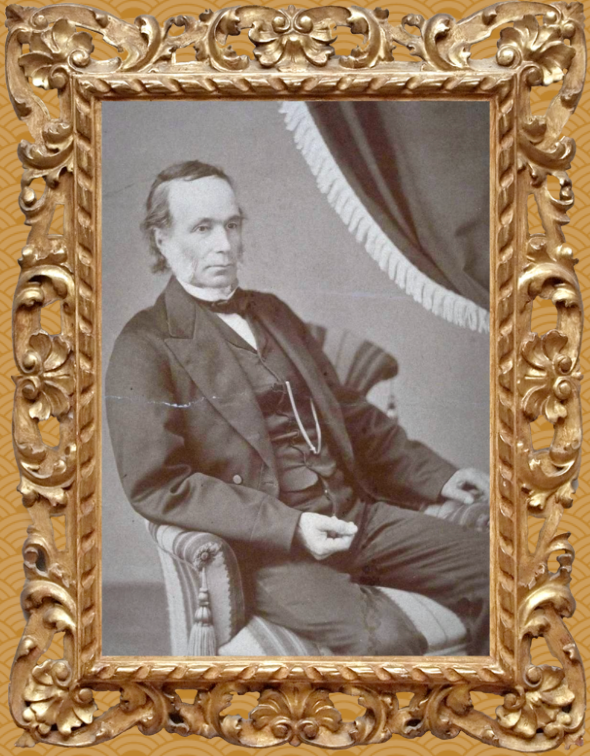
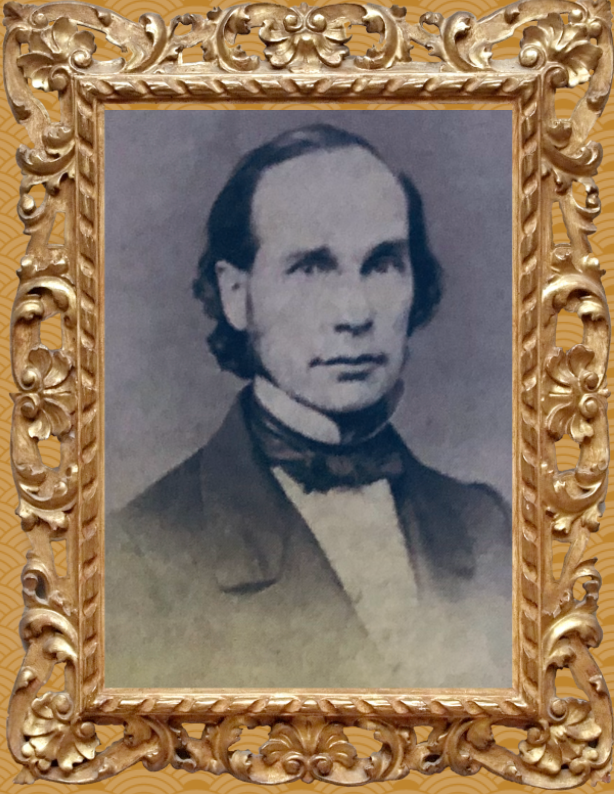
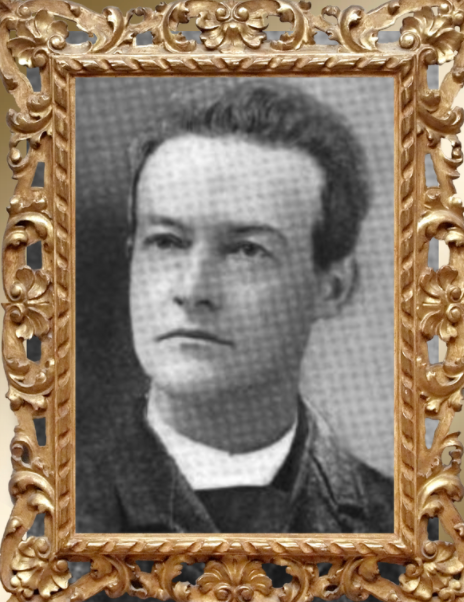
Image Gallery: A Few Founders of Berkeley
It was a need for a permanent location a couple years later in 1858 that had the College of California’s trustees looking to acquire land. Rev. Durant, President of the College of California looked to purchase land from Orrin Simmons and earlier settler of what would become Berkeley.[2] Of 160 acres, 15 of them were donated by F.A.L. Pioche of San Francisco, 10 acres from George M. Blake… another 60 acres from two trustees: Ira P. Rankin and E.B.Goodard, and 17 acres from William Hillegass.[3] Frederick Law Olmstead, who would later be involved in the initial development of San Francisco’s Golden Gate Park, was at this time conferred in the initial design of the campus and had also suggested names for the school.[4] In the end it was one of the College’s trustees, Frederick Billings, who is credited with the naming of Berkeley.[5]
Included in the exhibition is a short news piece announcing the town of Berkeley in the Sacramento Bee, 30 May 1866.[6]
While owning the property was one thing, moving the school to the new site was another. They would then form the College Homestead Association in 1864, purchasing more land from the entire property of Orrin Simmons, another 40 acres South of Campus from Francis K. Shattuck, George M. Blake, and James Leonard.[7] The land was surveyed and plotted out to sell to pay for the actual move from Oakland to Berkeley. Streets were laid out in a traditionally neat Jeffersonian-inspired grid pattern and named for illustrious men of science and letters of which most remain so-named today. North-South streets were named Audubon (now College), Bowditch, Choate (now Telegraph), Dana, Ellsworth, Fulton, and Guyot (now Shattuck) where East-West streets would be named Allston, Bancroft, Channing, and Dwight.[8] Shares were sold and promotion of the town as an escape from San Francisco began in earnest.
However, the personality of Berkeley from its start was more conservative, and disagreements would later divide the Western half of the city from the East Berkeley Anti-Saloon Activists, who promoted the prohibition of alcohol. One thing that smoothed transitions of the growing community was an association between Ocean View and Berkeley called the "Berkeley Land and Town Improvement Association," started in 1874 by Rev. Henry Durant, University of California's first president. The Association worked to streamline development between the two areas including land development and transportation.[9]
Berkeley incorporated in 1878, it had its first election pitted the Workingmen’s Party against the Citizens Ticket. Ocean View, often referred to as West Berkeley by Berkeley residents, was Workingmen’s territory as was much of California. It was this party that won out in these early days. The Workingmen’s Party originated in 1870s San Francisco, headed by Denis Kearney, an Irish immigrant and labor organizer who fomented anti-Chinese sentiment (and violence) through his speeches.
The anti-Asian sentiment itself dates to at least the Gold Rush, but the late 1870s also experienced a Depression, which kept wages low. This in turn found workers looking for a scapegoat. Many organizations sprang up or co-opted these anti-immigrant platforms. The Native Sons of the Golden West and the Asian-Exclusion League were as active in the East Bay as they were in San Francisco and would see contemporaries of Kearney spreading similar messages. It was noted that “Chinese Must Go” rallies were held on Shattuck Avenue, where many Chinese businesses were vandalized.[11] The Workingmen’s Party, despite being called Progressives, was anti-Asian. However, despite the racism of Berkeley’s permanent residents, the University of California was open to the education of people of color.
1874 Map of the Berkeley (Showing Property of the
Berkeley Land and Town Improvement Association. [10]
[1] William Warren Ferrier, Berkeley, California: The Story of the Evolution of a Hamlet into a City of Culture and Commerce. (Berkeley.: self-published, 1933), 43.
[2] Federal Writers’ Project, Works Projects Administration, Berkeley, the First Seventy-Five Years, (New York: AMS Press, 1941), 24.
[3] Federal Writers’ Project, 25.
[4] Ferrier, 58.
[5] Ferrier, 60.
[6] "The New Town of Berkeley" (Sacramento Bee, 30 May 1866), 2.
[7] Federal Writers’ Project, 27.
[8] Wollenberg, 25.
[9] Willard M. Oliver, August Vollmer: the Father of American Policing. (Durham: Carolina Academic Press, 2017), 86.
[10] “Map of Berkeley showing the property of the Berkeley L.T.I. Association.” (Berkeley: Berkeley L.T.I. Association), 1874. Online Archive of California. https://oac.cdlib.org/ark:/13030/hb067n99fq/?brand=oac4
[11] Wollenberg, 35.
